
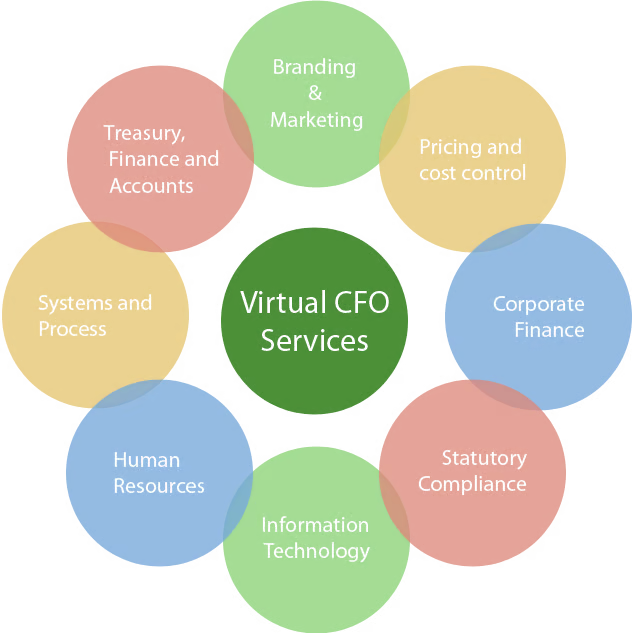
A Chief Financial Officer (CFO) is a strategic executive who oversees all financial aspects of a company. This includes planning, organizing, directing, controlling, and evaluating the use of an organization’s financial resources. In essence, a CFO is the financial architect of a company.
Key Responsibilities of a CFO
- Financial Planning: Developing budgets, forecasting cash flow, and creating long-term financial strategies.
- Financial Management: Managing the company’s assets, controlling expenses, and ensuring efficient use of funds.
- Financial Reporting: Preparing accurate and timely financial statements, including income statements, balance sheets, and cash flow statements.
- Financial 1 Analysis: Analyzing the company’s financial performance, identifying trends, and recommending improvements.
- Risk Management: Identifying and managing financial risks that could impact the company, such as foreign exchange risk, credit risk, and market risk.
- Investor Relations: Interacting with investors, analysts, and financial institutions.
Why is a CFO Important?
A competent CFO can significantly contribute to a company’s success by:
- Enhancing Profitability: Optimizing resource allocation and making sound investment decisions.
- Minimizing Risk: Effectively identifying and managing financial risks.
- Increasing Transparency: Providing accurate and transparent financial information to stakeholders.
- Supporting Growth: Providing the necessary funds for business expansion.
Risks of Poor Financial Management
Without a strong financial management system or a dedicated CFO, companies may face the following risks:
- Bankruptcy: Due to poor financial management and an inability to meet financial obligations.
- Inability to Invest: Lack of funds for business growth and development.
- Loss of Investor Confidence: Inaccurate or incomplete financial reporting can erode investor trust.
- Incapability to Weather Crises: The company may struggle to cope with economic downturns or other crises.
Dana Consultants: Your Virtual CFO Partner
If your company doesn’t have a full-time CFO, consider partnering with a virtual CFO like Dana Consultants. We offer a range of financial services, including:
- Financial Consulting: Providing advice and recommendations on financial strategies.
- Financial Planning: Developing budgets, forecasting cash flow, and creating long-term financial plans.
- Financial Analysis: Analyzing your company’s financial performance and identifying areas for improvement.
- Financial Reporting: Preparing accurate and timely financial statements.
- Risk Management: Helping you identify and manage financial risks.
Benefits of a Virtual CFO:
- Flexibility: Pay only for the services you need.
- Expertise: Access to a seasoned CFO’s knowledge and experience.
- Cost-Effective: Often more affordable than hiring a full-time CFO.
Ready to take your company’s finances to the next level? Contact Dana Consultants today for a free consultation.
Email: askcfo@dana-consultants.com Phone: +628112742314